Art for Wellness & Therapeutic Spaces
The art in a therapeutic space matters more than most people think. It sets a tone before anything is said. These pieces are built from mathematics that resolves — equilibrium fields, breathing rhythms, diffusion curves, soft potential wells — and they bring that resolution into the room.
Every piece is hand-coded in Python. No image generators, no prompts. The calm you see comes from the structure of the equations underneath.
Museum-quality giclée on Hahnemühle German Etching 310gsm. Three sizes from $45. Free shipping on every order.
Therapy & Counseling Offices
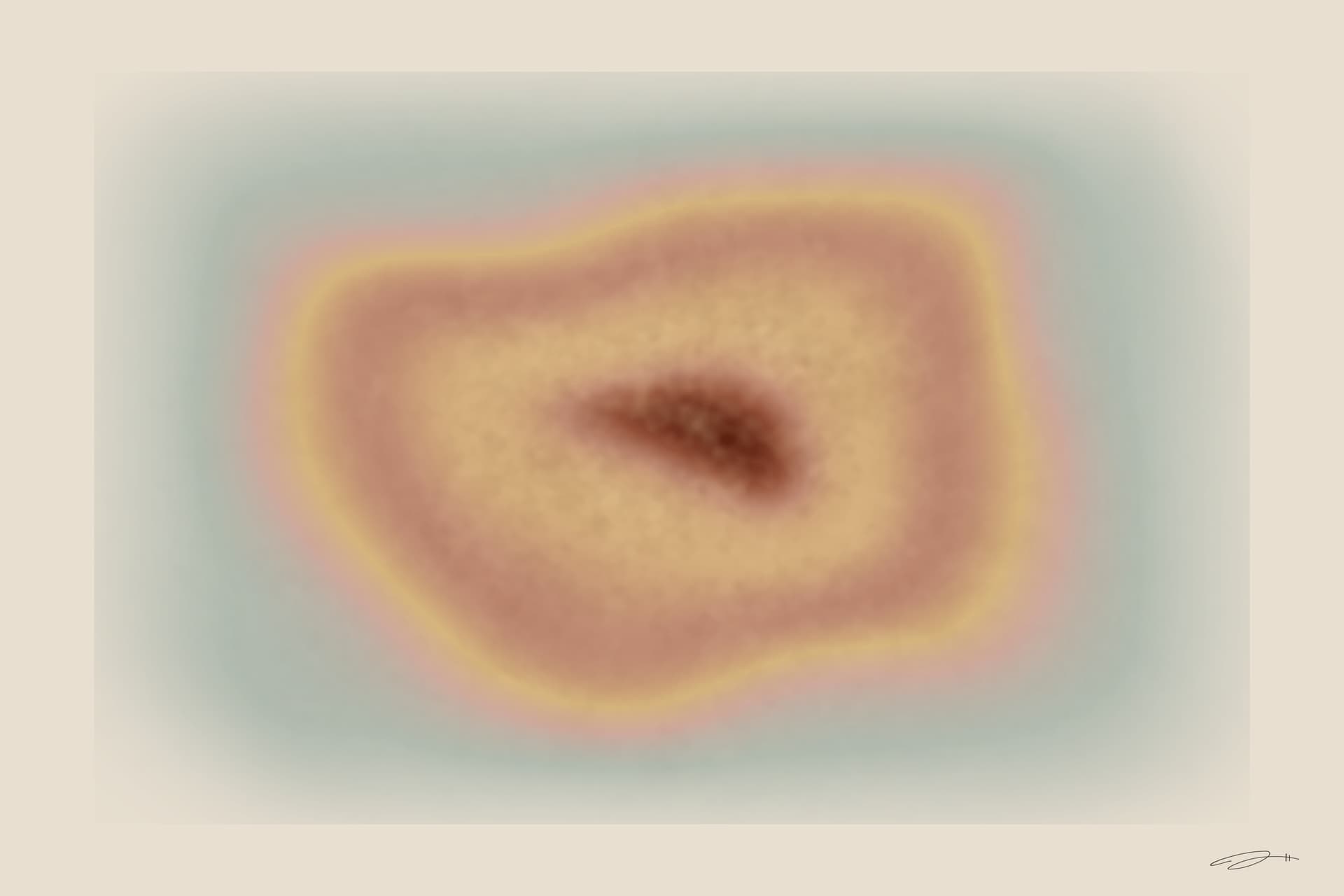
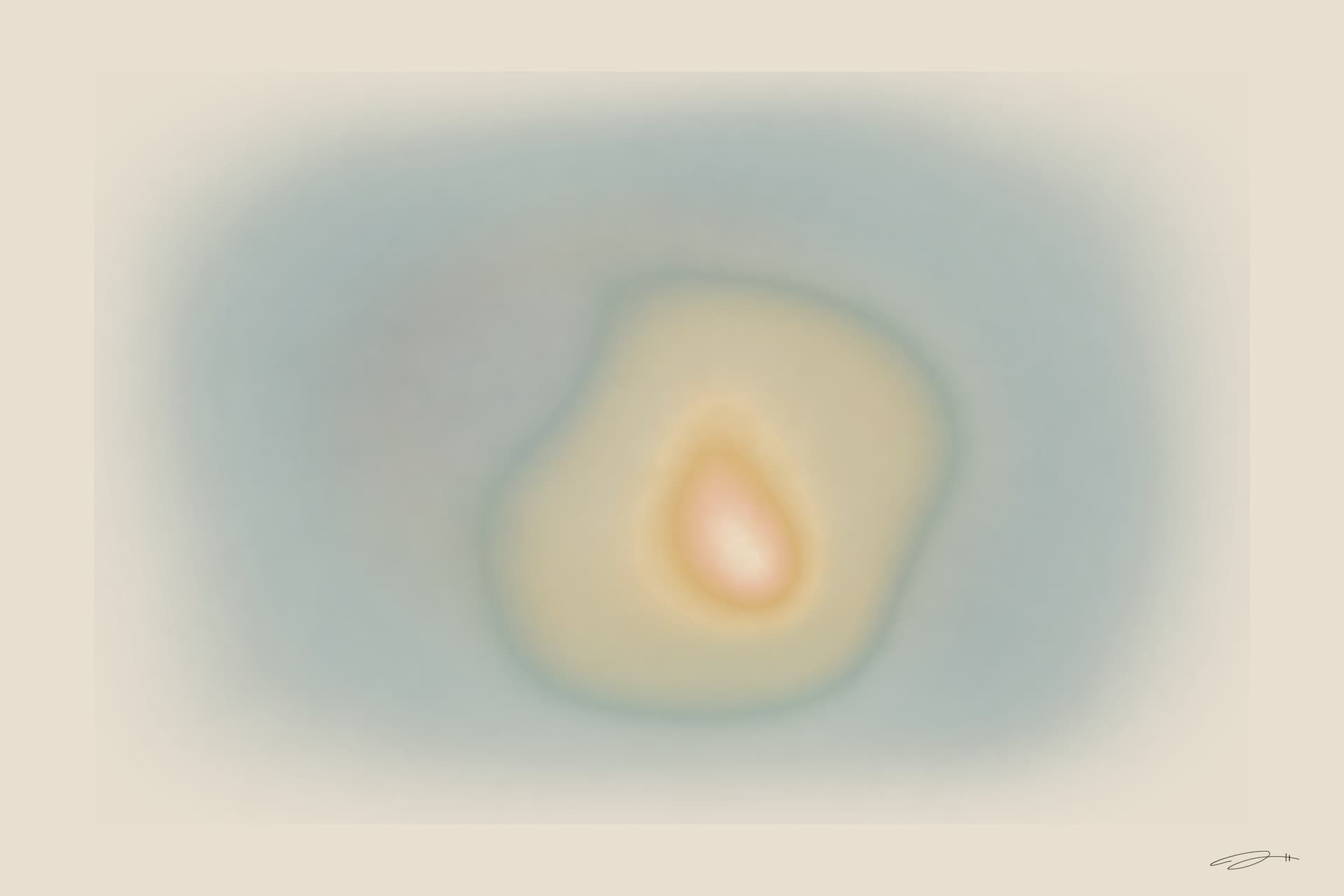
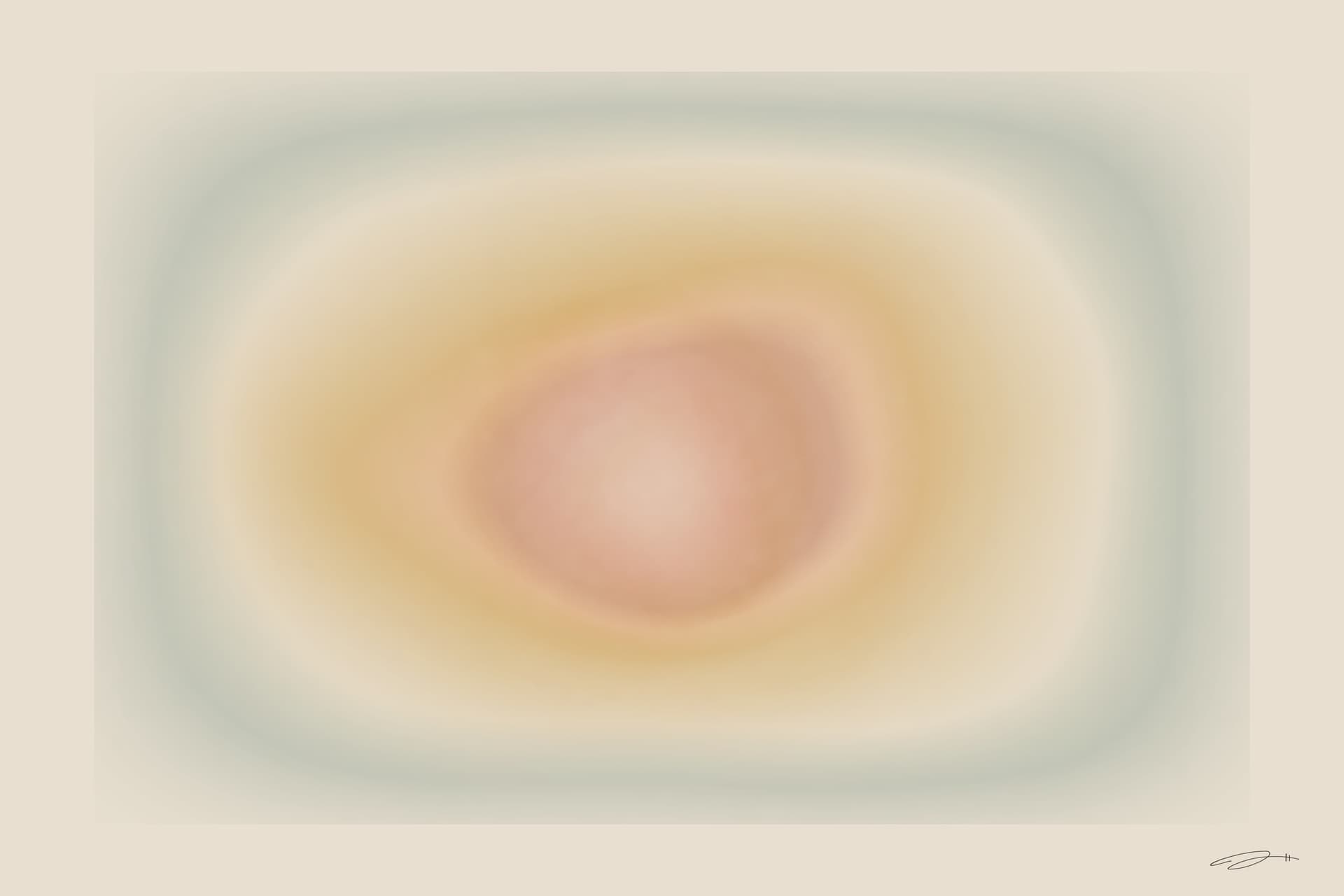
Art that holds difficult feelings without dramatizing them. Equilibrium fields, diffusion curves, and domain-warped forms that give a room emotional range without pushing anyone toward a specific response.
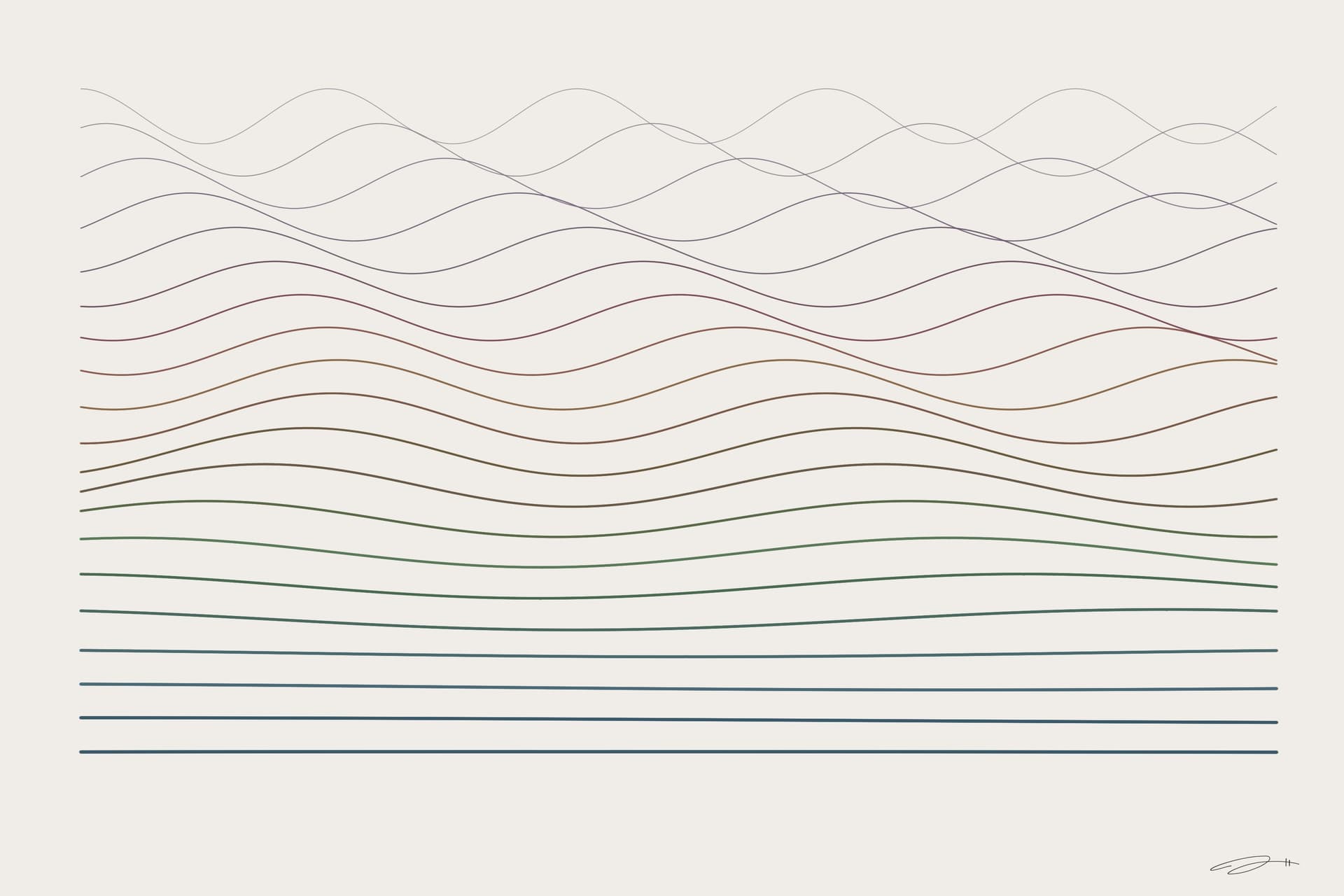
PEACE
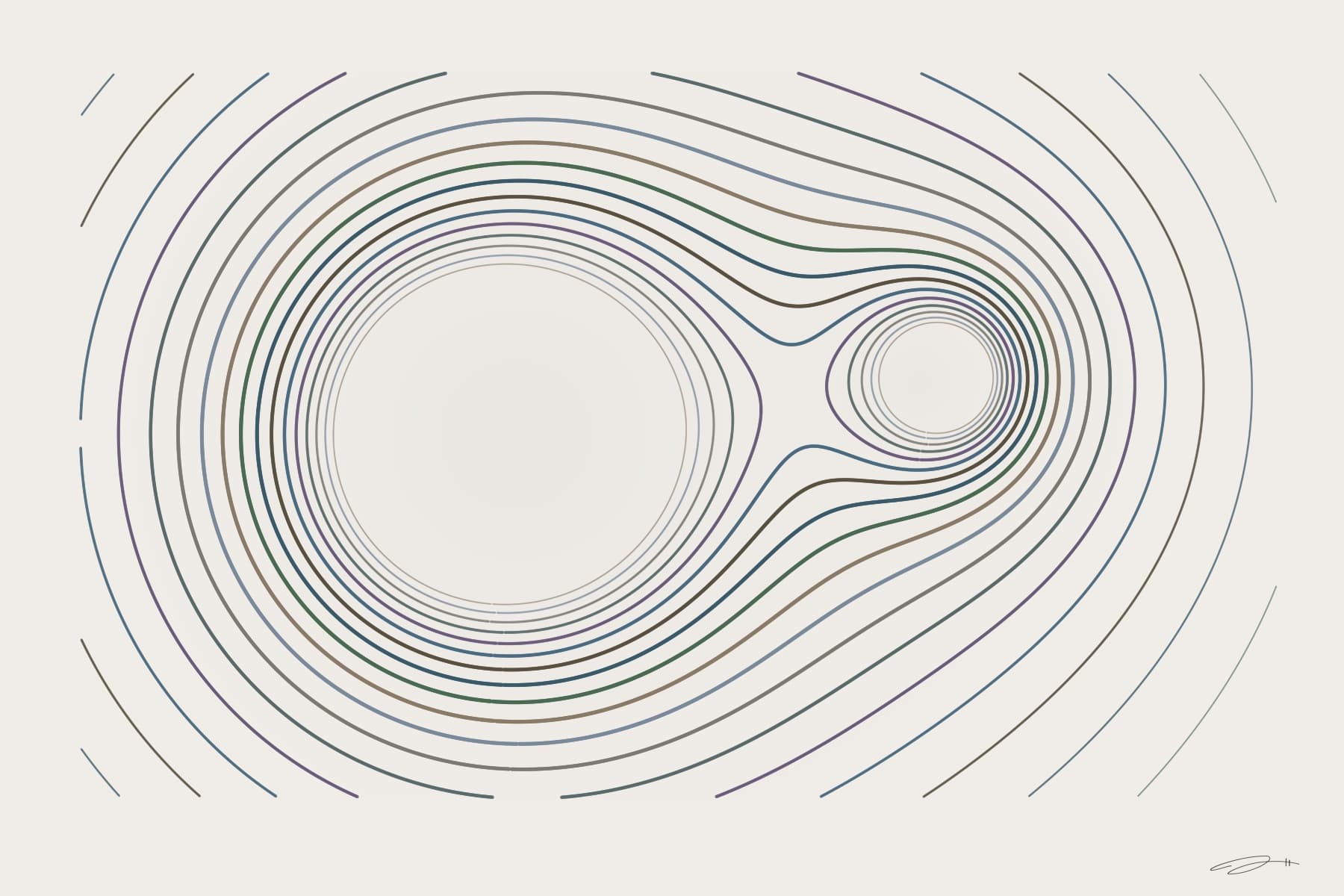
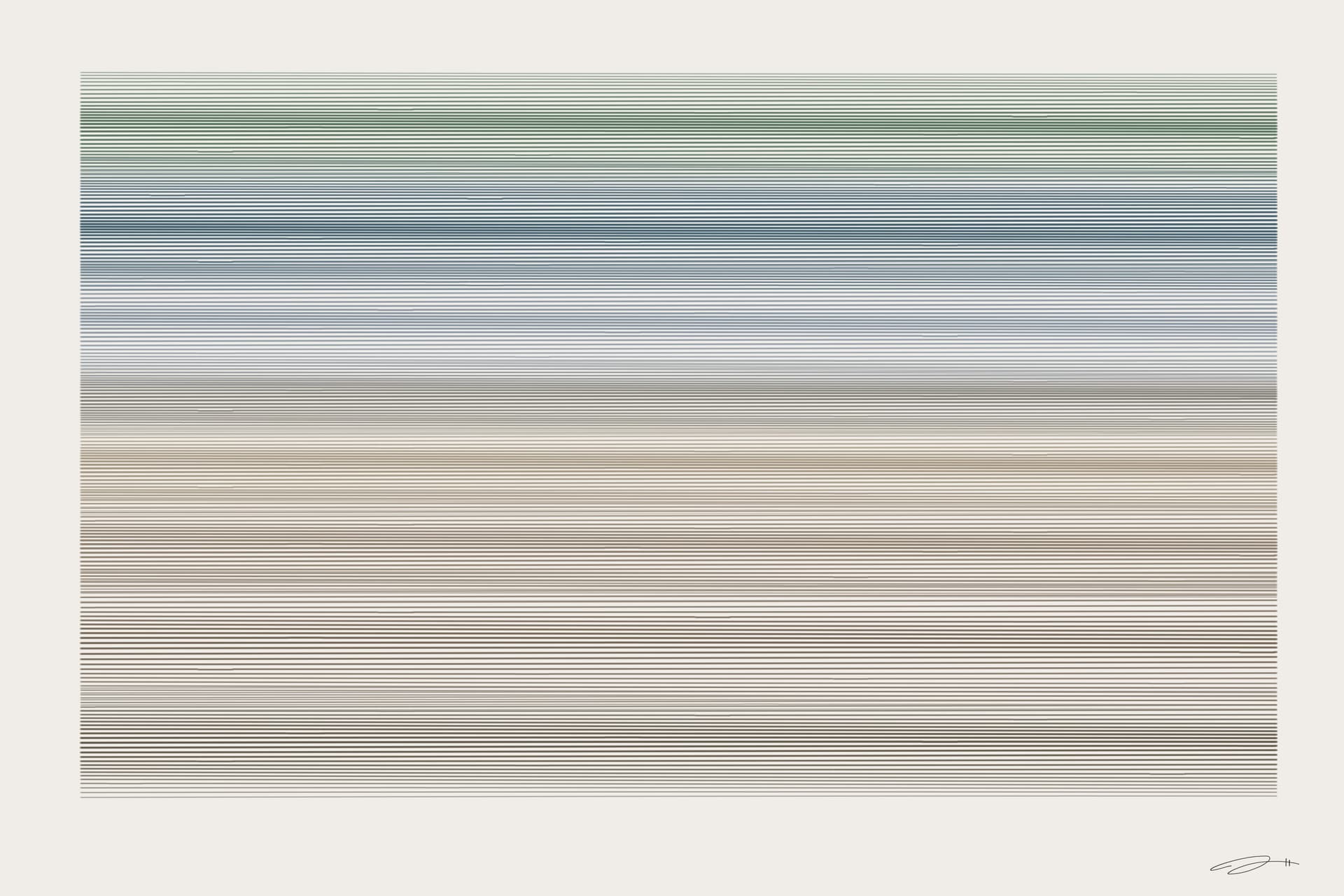
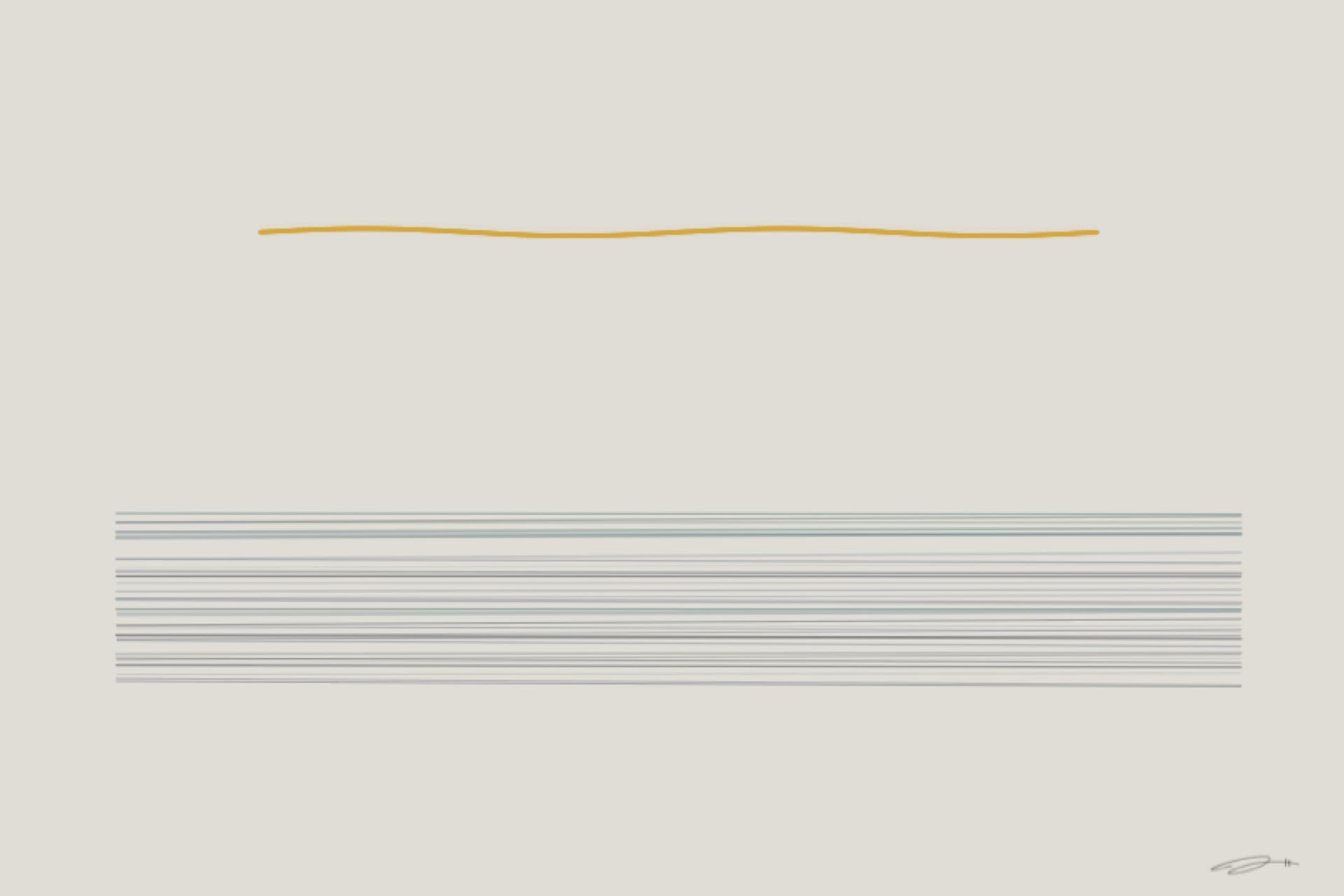
After all forces have balanced. Sand shaped by wind. Water with no gradient. The mathematics of having arrived.
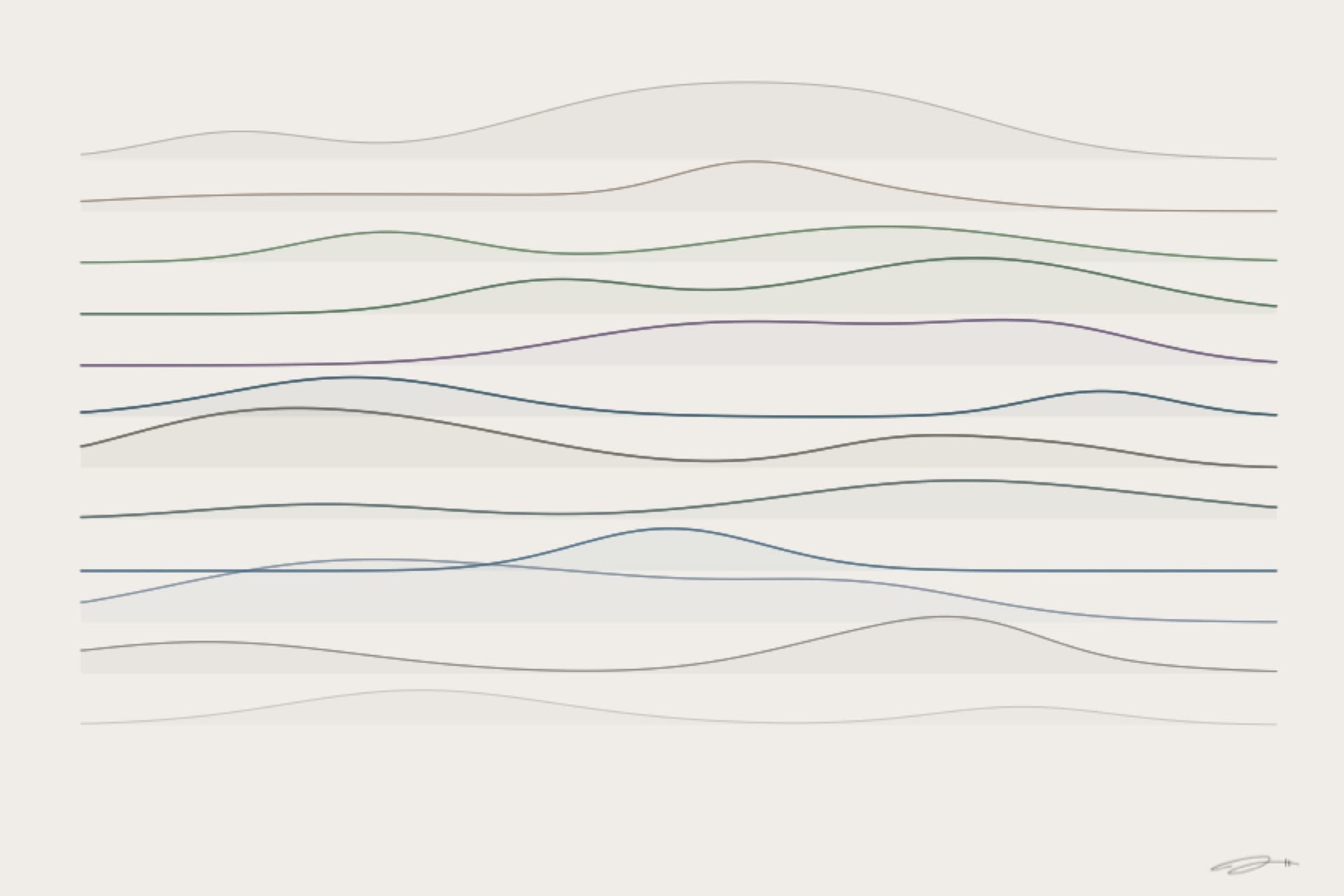
GRIEF
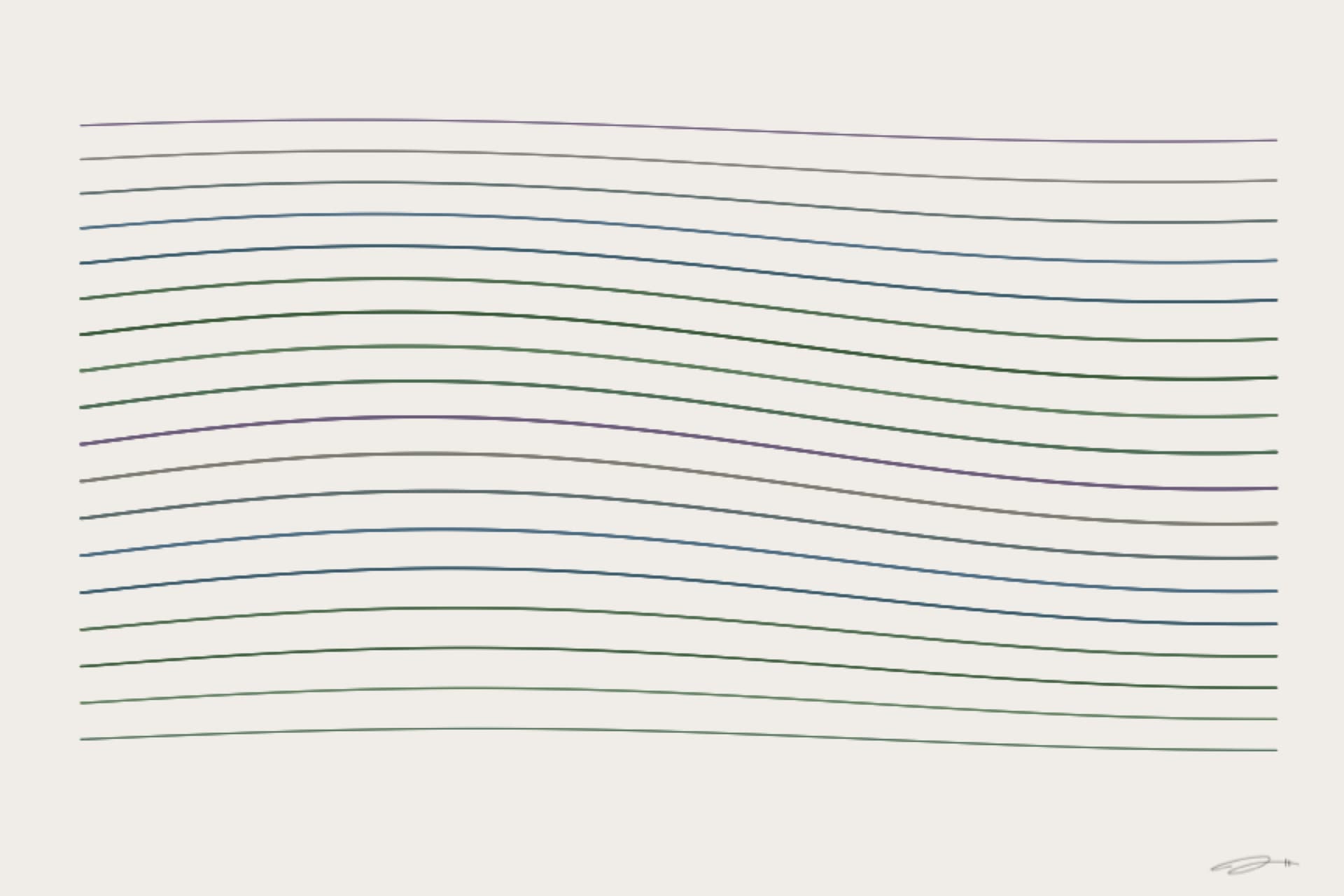
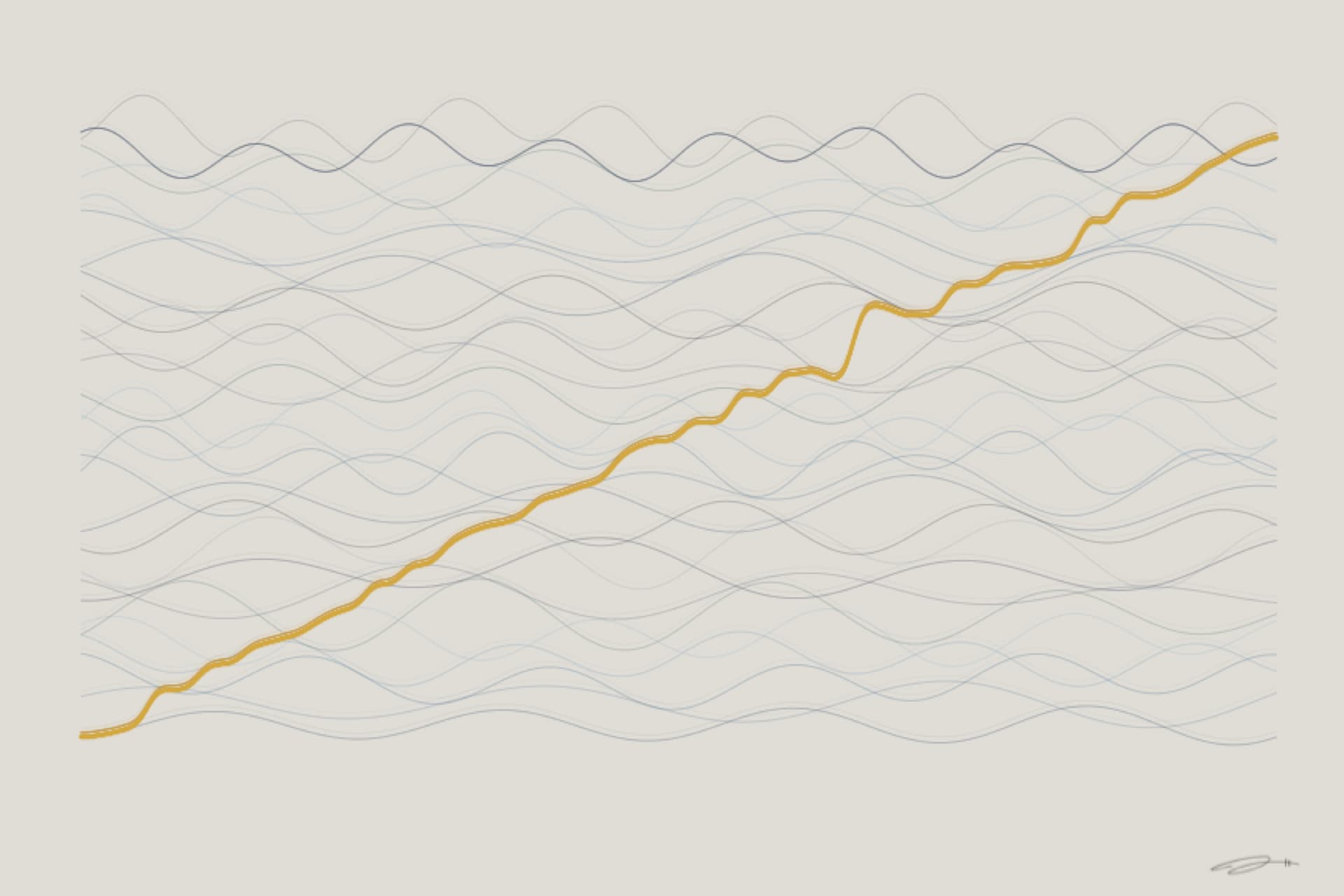
The mathematics of what disappears. Warmth that spreads until you can't find the source. Steps that only go down.
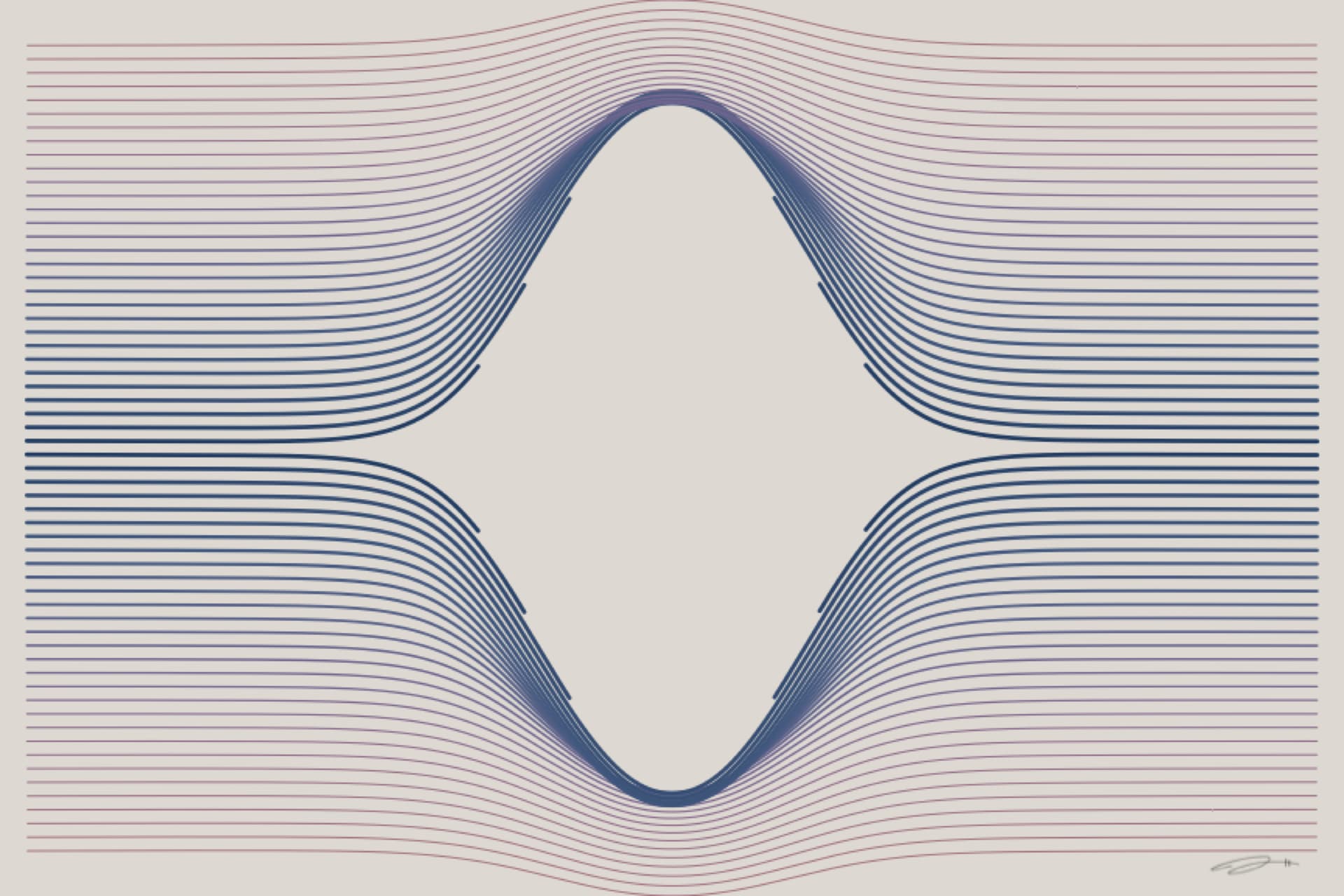
Void
|x/a|^p + |y/b|^q = 1
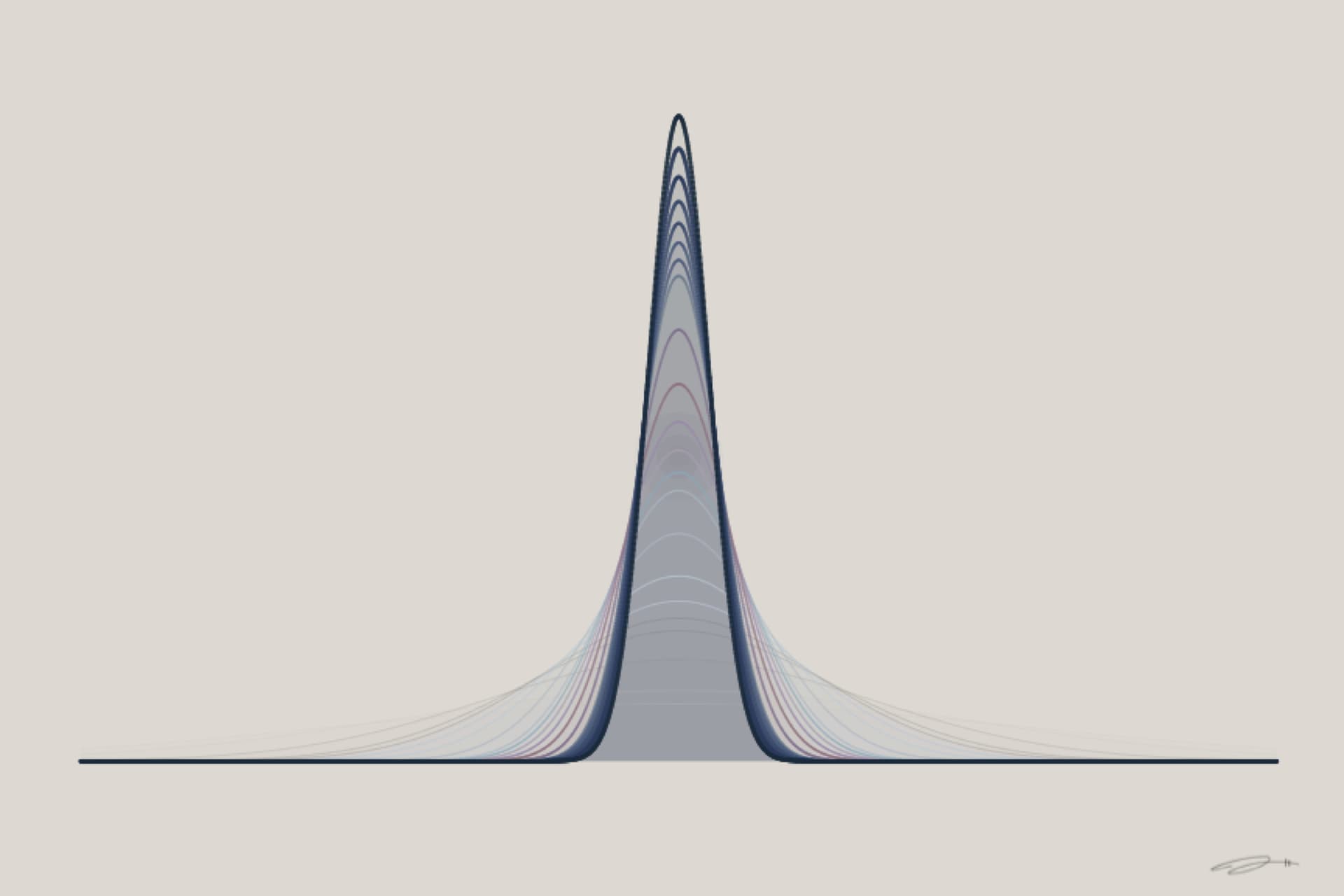
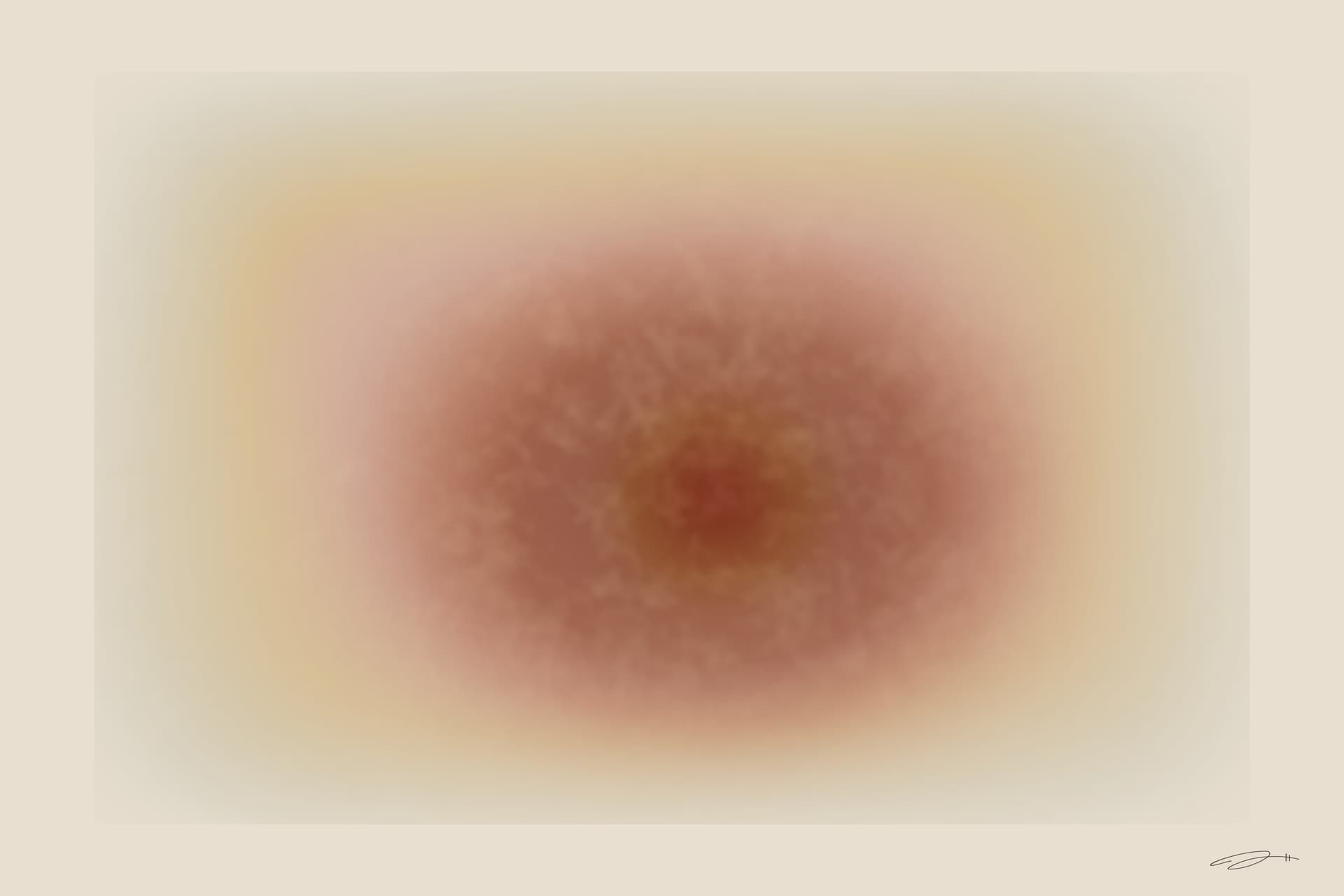
Heat Diffusion
∂u/∂t = α·∂²u/∂x²
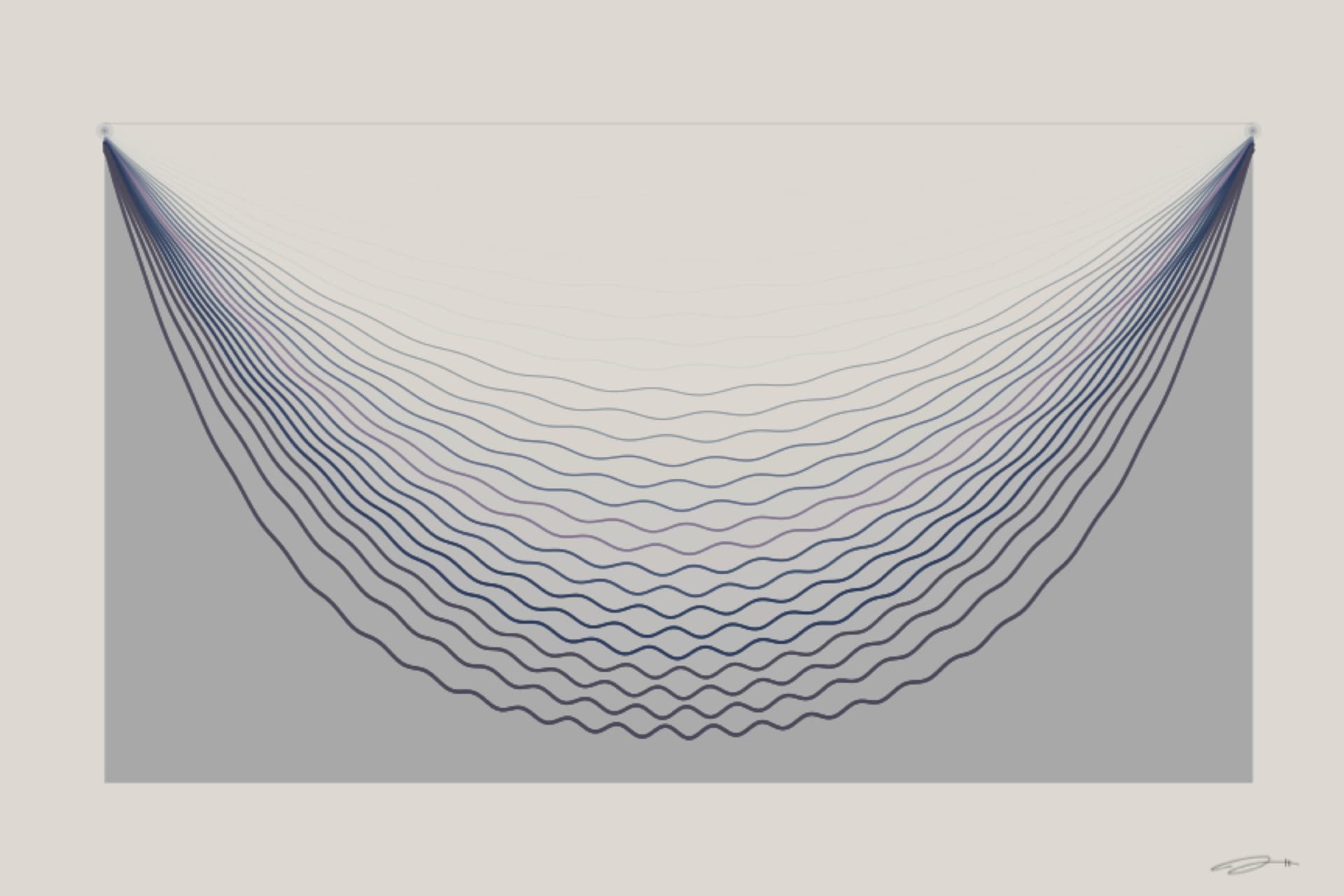
Weight
y(x) = a·cosh((x−c)/a)
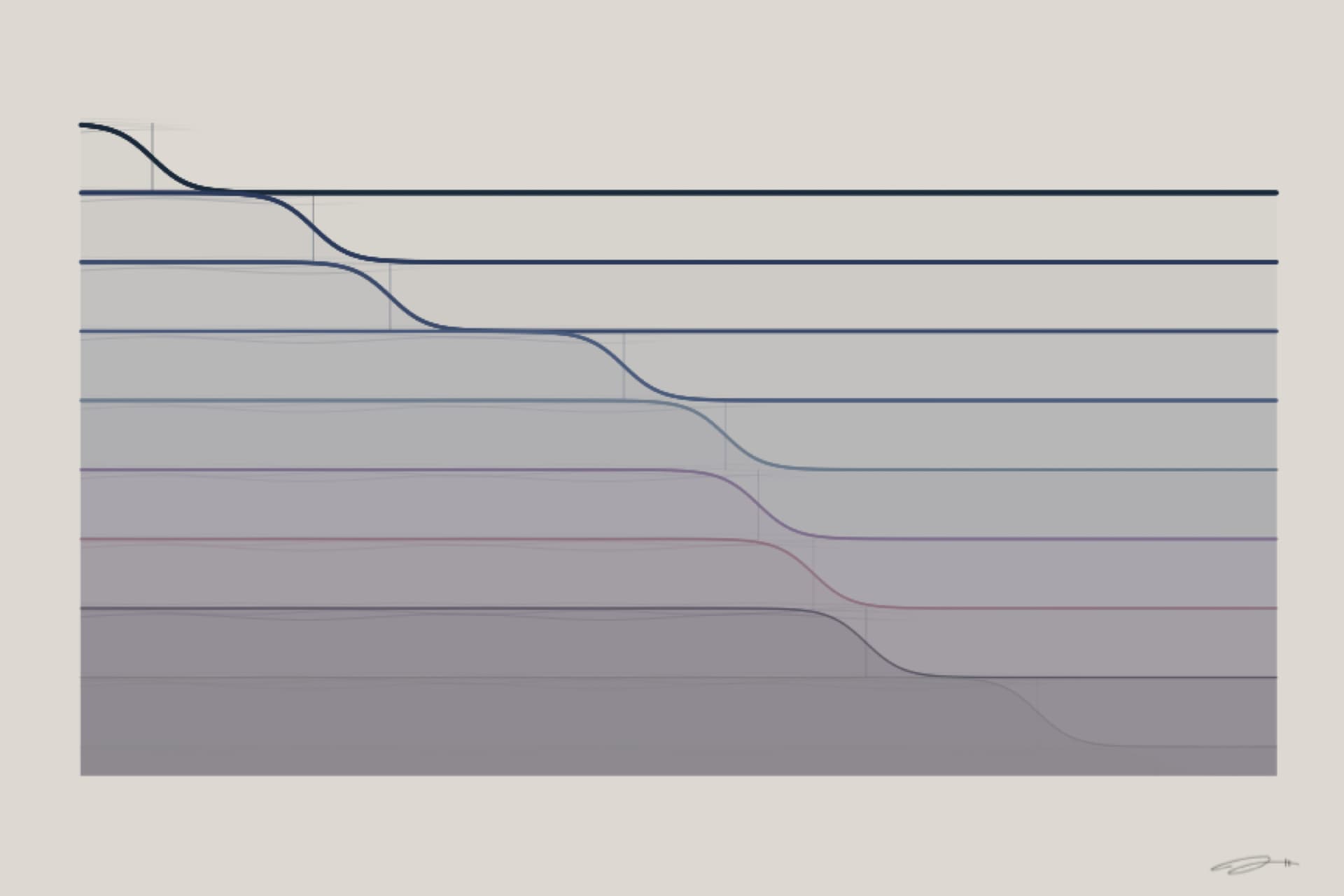
Heaviside Cascade
H(t−tₙ) = {0, t<tₙ; 1, t≥tₙ}
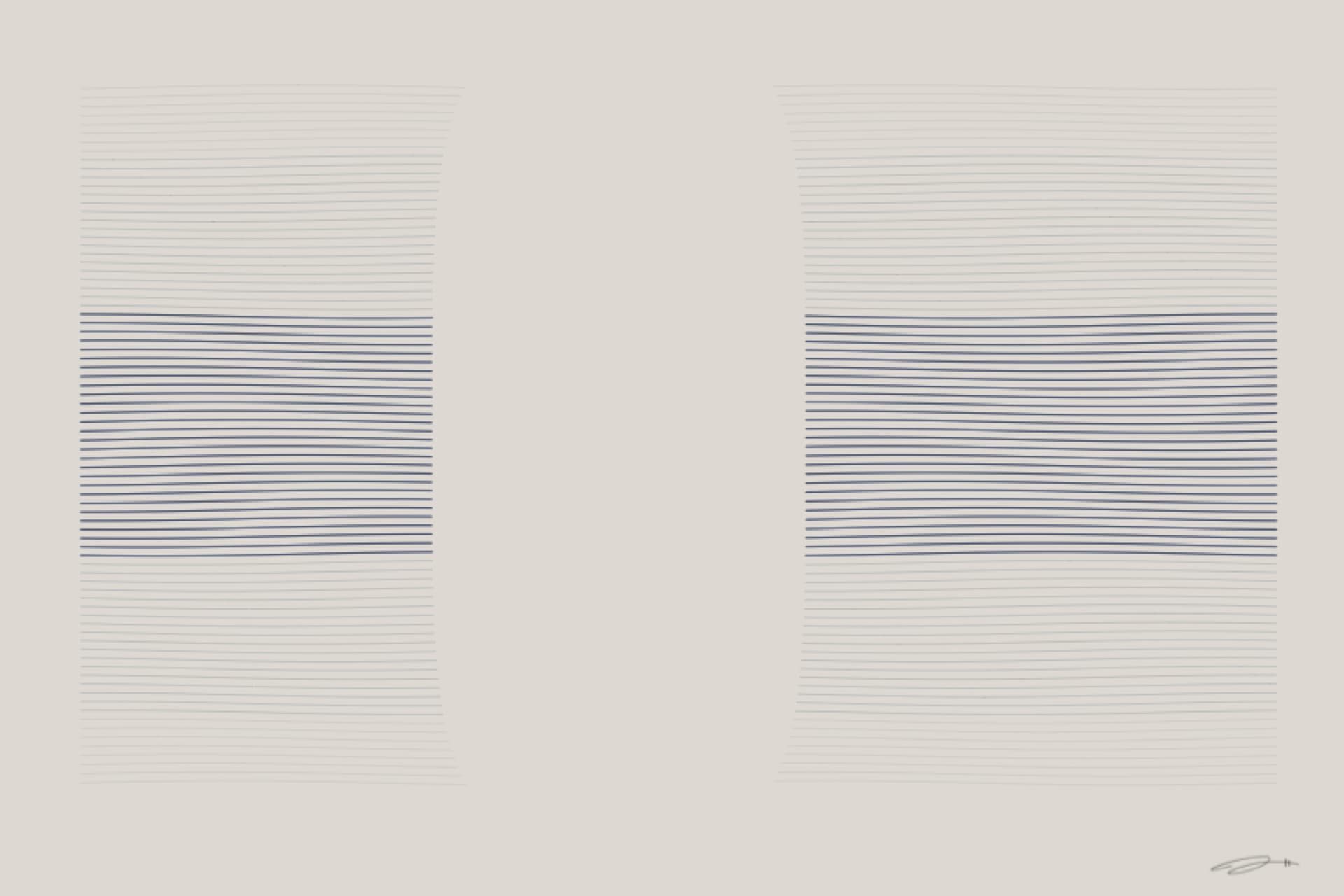
Absence
f(x) = Σ aₙ·e^(−λₙt)·cos(nπx)
Yoga & Meditation Studios
Breathing rhythms, resolved harmonics, and the mathematics of letting go. Pieces that support stillness rather than competing with it.
PEACE
After all forces have balanced. Sand shaped by wind. Water with no gradient. The mathematics of having arrived.
Waiting Rooms
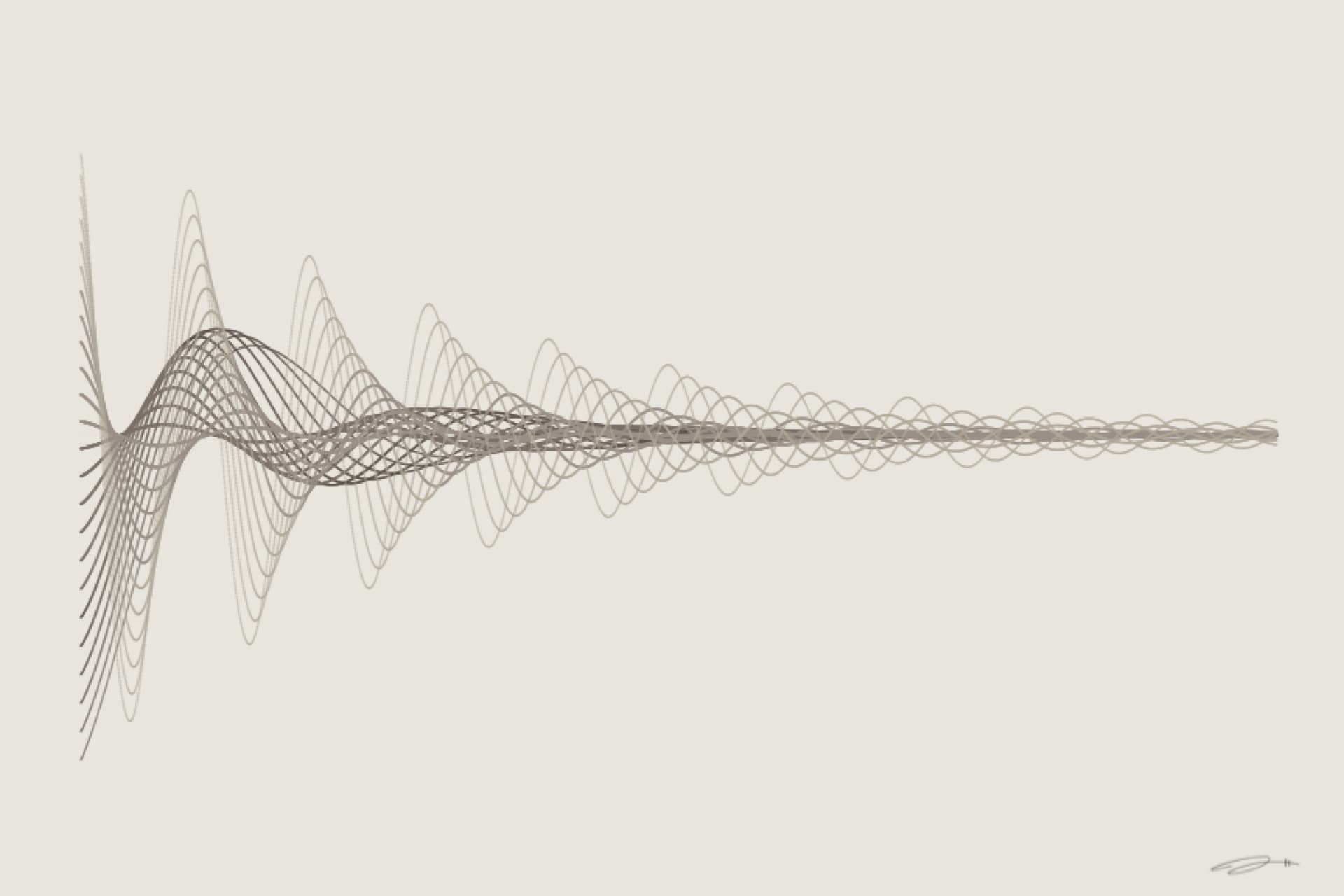
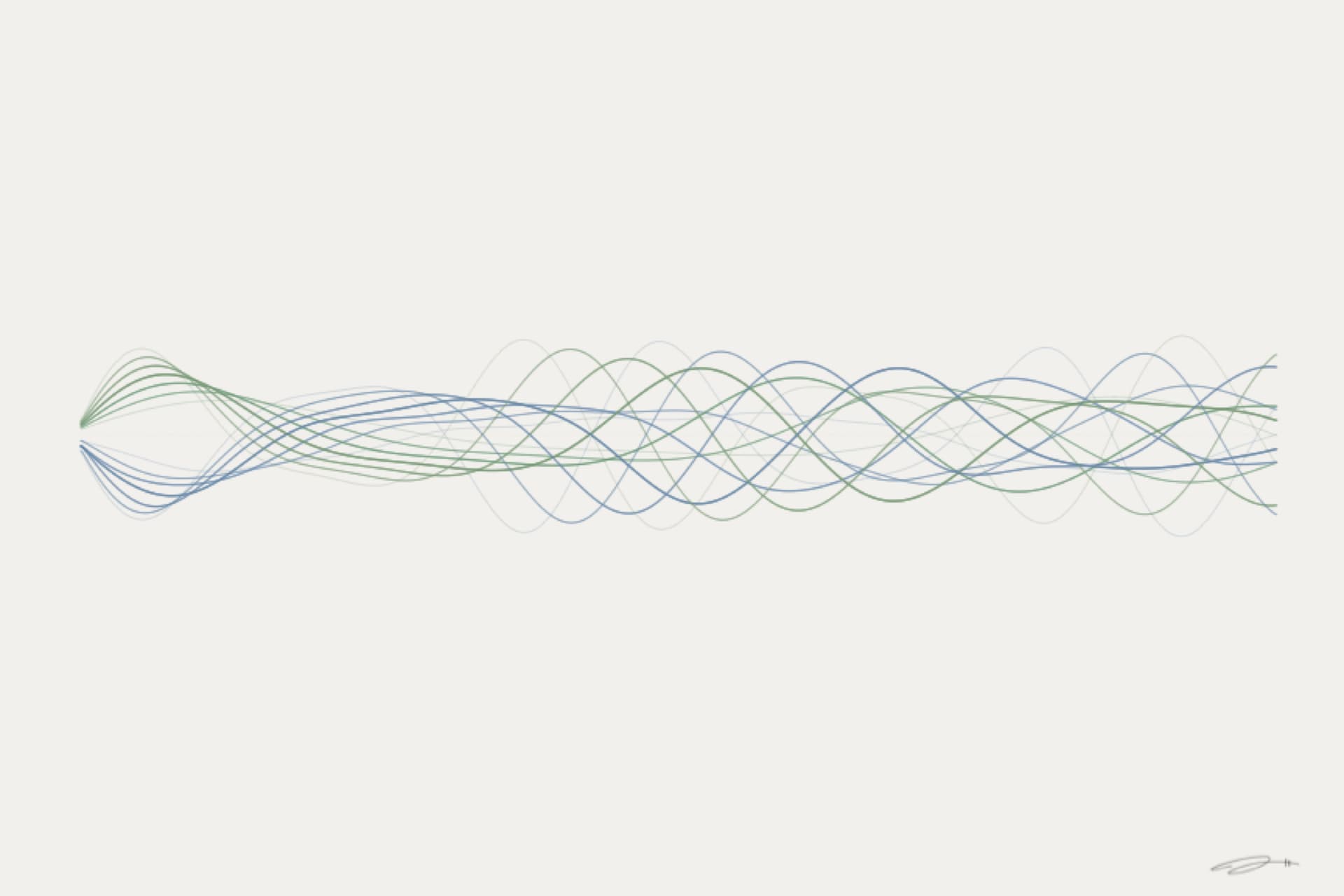
Mirrored signals, handshake curves, and soft potential wells. Art that communicates safety before a word is spoken.
TRUST
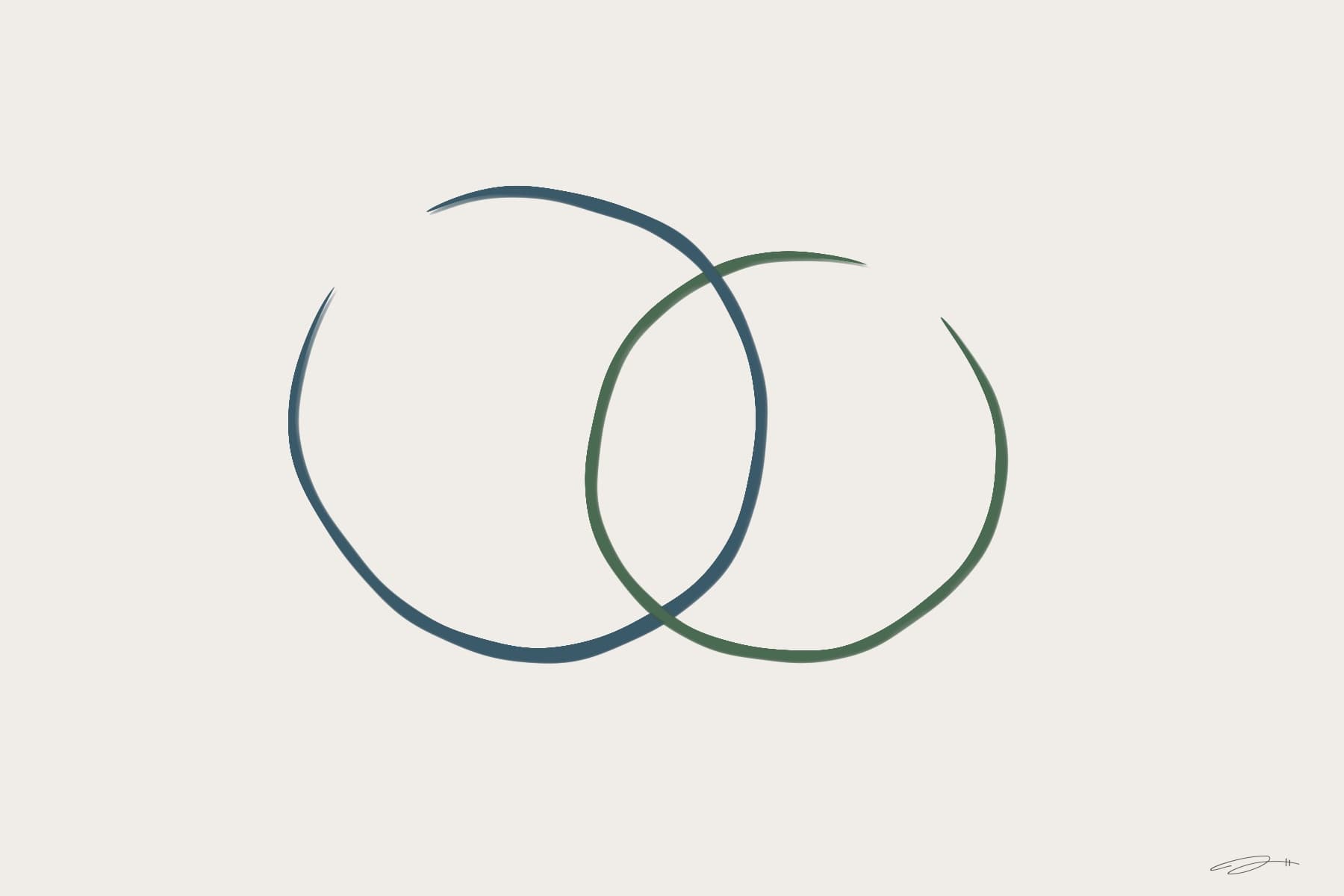
Choosing the same rhythm without being asked. The mathematics of mutual vulnerability.
Breath Together
φ₁(t) - φ₂(t) → 0 as t → ∞
Handshake
SYN → SYN-ACK → ACK
Mirror
y₁(t) = αy₂(t-τ) + (1-α)y₁(t-τ)
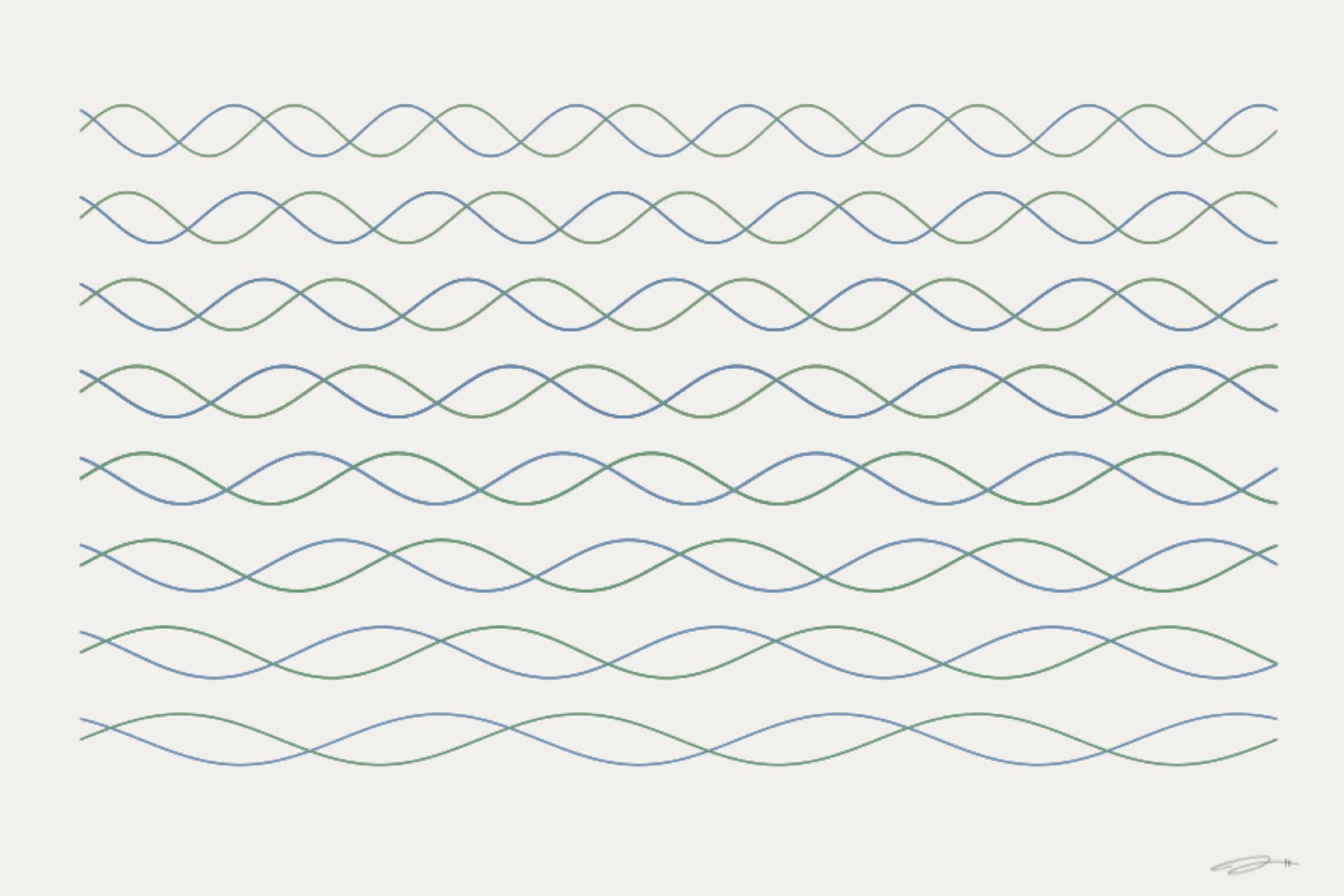
Weave
f(x,y) = sin(x)sin(y) + sin(x)cos(y)
Corporate Wellness
Restores rather than stimulates. Vast fields, equilibrium lines, and interlocking weaves that give a space room to breathe.
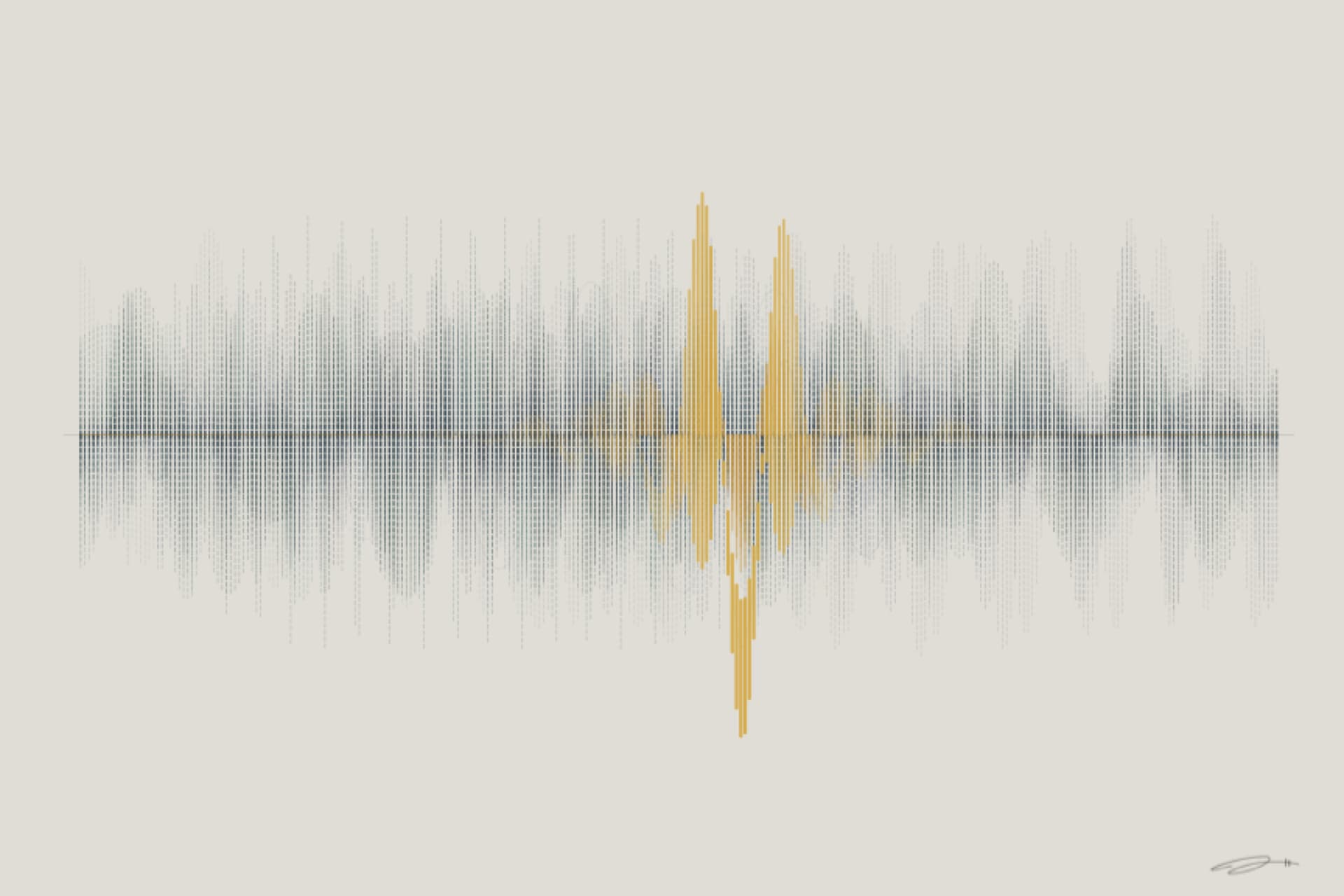
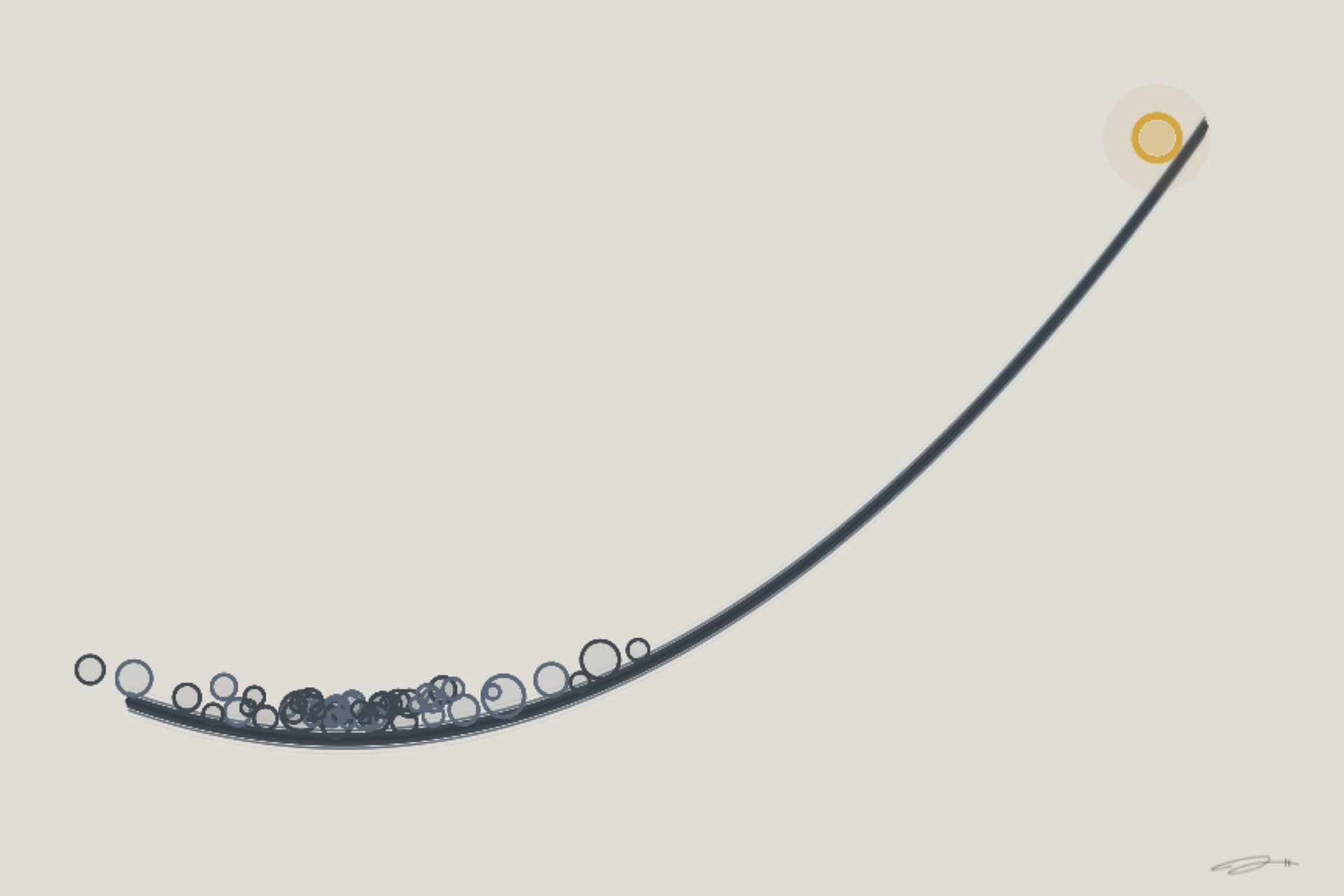
SOLITUDE
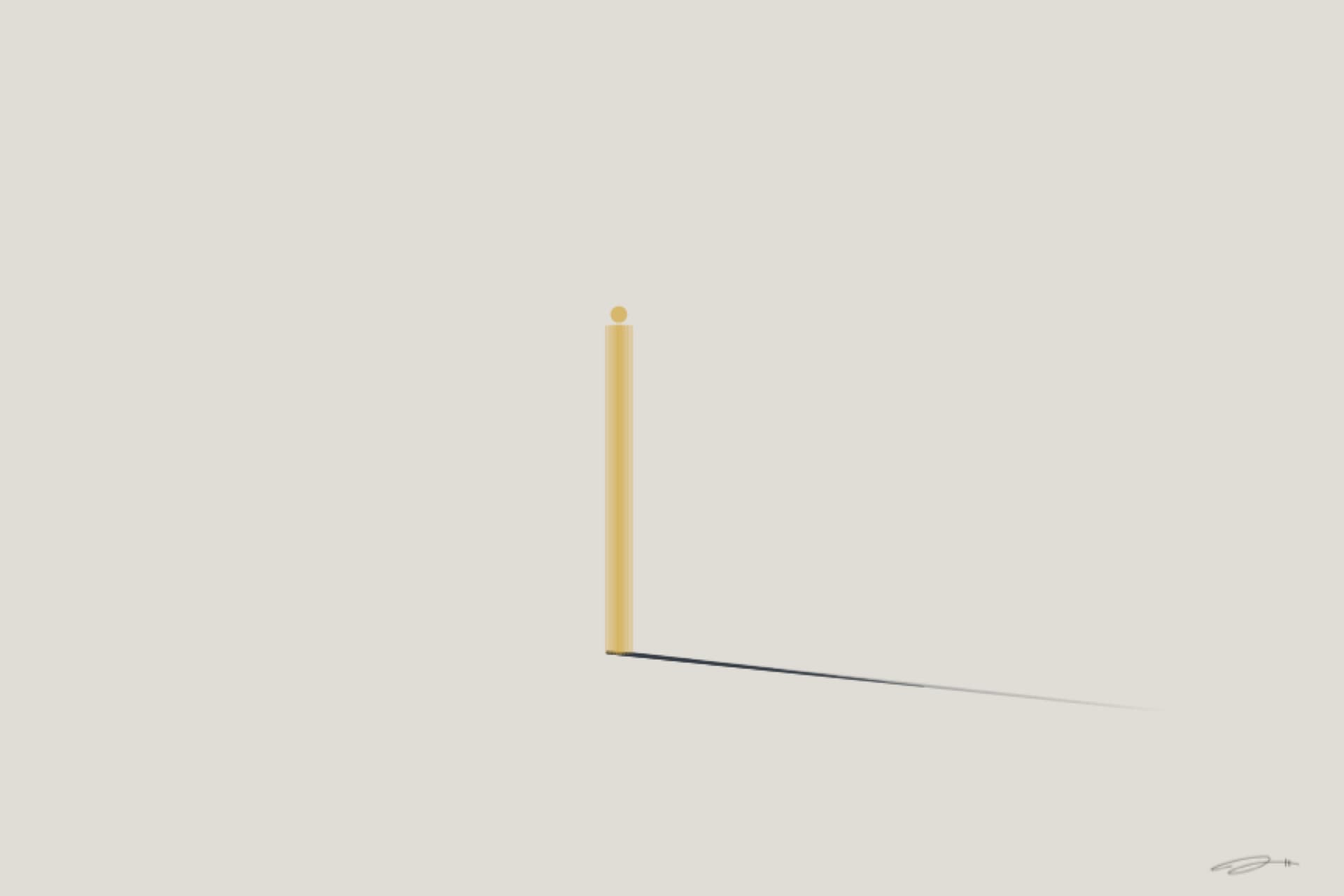
One point in an infinite plane. One signal in silence. The mathematics of being the only thing present.
PEACE
After all forces have balanced. Sand shaped by wind. Water with no gradient. The mathematics of having arrived.
TRUST
Choosing the same rhythm without being asked. The mathematics of mutual vulnerability.
Breath Together
φ₁(t) - φ₂(t) → 0 as t → ∞
Handshake
SYN → SYN-ACK → ACK
Mirror
y₁(t) = αy₂(t-τ) + (1-α)y₁(t-τ)
Weave
f(x,y) = sin(x)sin(y) + sin(x)cos(y)
Common Questions
What art is best for a therapy office?
Art that holds emotional range without directing it. Abstract work with resolved tension, soft forms, and warm neutrals tends to work well — it gives clients space to bring their own feelings rather than reacting to the art. The Peace, Grief, and Belonging series are designed with exactly this quality.
Does wall art affect stress levels?
Research suggests that viewing certain types of art — particularly nature-based imagery, abstract work with soft curves, and compositions with visual balance — can lower cortisol and reduce perceived stress. Art with resolved mathematical harmony, like the equilibrium fields in the Peace series, creates an atmosphere of calm that people feel even when they are not consciously looking at it.
What size art works best for an office?
For a therapy or counseling office, the 24×16" size works well across from seating — large enough to be present without dominating. For waiting rooms and yoga studios, the 36×24" size creates an anchor point. The 12×8" size suits smaller spaces, grouped arrangements, or desks.
Looking for something specific?
Browse all 79 pieces in the full catalog, explore work by emotion, or commission a custom piece in your preferred colors and dimensions.